As for my own suggestions, you can't go wrong with anything Alan Moore for those with sophisticated and off-kilter tastes. For younger readers, Bone, American Born Chinese, Goodbye Chunky Rice, Electric Girl, or any of the Toon Book titles, especially titles in the Little Lit series, are excellent choices.
More for older readers? Anything Eisner, something from Joe Sacco, Deogratias: A Tale from Rwanda, the latest "Best American Comics" anthology, and the new Brunetti anthology is OK too.
But don't just take my word for it, follow the link to The Beat and find additional links to guides from Tom Spurgeon and Comic Book Resources.
A Public Service Announcement! ;)

Friday, November 28, 2008


Wednesday, November 26, 2008
Happy Thanksgiving!
Enjoy your turkey, ham, mashed potatoes, stuffing, cranberries, and pumpkin pie this Thanksgiving; just hide the last item on that list if this guy knocks on your door:

UK Marketing Studies on Kids and Comics
Click here and here and here for some stories compiled by Hedi over at The Beat dealing with how numbers show that British youngsters are reading to comics in excitingly large numbers. Hey, I know there are some lit snobs out there, some gaming snobs, and surely some film snobs as well, but we all have to admit it is great to see kids holding something in print and having a great time with it.-- even if these particular kids do talk all funny and remind us of those Harry Potter kids. ;)
Tuesday, November 25, 2008
Review: Kid Beowulf and the Blood-Bound Oath
 Alexis E. Fajardo, illustrator at the famed Charles M. Schulz studio, is on a mission to retell the epic tales of civilization. His main characters as he begins this quest? Beowulf and Grendel, who are revealed to be tied together more closely than anyone could imagine in the book to start the series of revisionist tales, Kid Beowulf and the Blood-Bound Oath.
As it turns out, the story behind Beowulf and his foes has been a misunderstanding, a twisting of the truth over thousands of years. That's what you get when you're relying on an oral tradition, I guess. In Fajardo's "truth," the dragon, Grendel's mom (Gertrude), Beowulf and Hrothgar are all blood relatives after a power-hungry Hrothgar makes a deal with the dragon to ensure that he'll rule his father's kingdom someday. Of course, no one wants anyone else to know who is related to whom, so the story is full of political intrigue, manipulation, and conflict. Add to the equation more macro-level politics as diverse bands squabble with other tribes over land, food, women, and loyalty, and the plot gets thick pretty quickly.
There is no shortage of Beowulf-inspired comic adaptations on the market right now. What sets this title apart is that it works from a level "one up" from the bulk of its contemporaries. It does not seek a simple retelling of the Beowulf story so that struggling readers can gain access to the story through alternate or complementary means; it retells via a revisioning of the story, taking classic characters and timeless themes and revamping them to craft a completely new and exciting narrative that is inspired by the original but by no means bound by it, unlike how Hrothgar is bound to his oath, which acts the impetus for much of the destruction and dissonance in the title.
It builds interest in the original text by honoring it but playing with it; it builds student motivation to read the original without necessarily having that as its ultimate goal. Those who read Fajardo's revisionist romp may be moved to the canonical poem Beowulf or John Gardner's Grendel because they've developed a love for the characters as they have been more fully examined in the graphic novel. Surely surprises await those who have never read the poem when they do so, and I'll bet that when those readers get to certain spots often read as victorious, they'll have a deeper reaction than most readers who see certain de-limbings and dragon-slaying as par for the course for the epic form.
Marketed to readers in grades 9 and up, Kid Beowulf and the Blood-Bound Oath is a fun, character-building extension of the Beowulf mythos and illustrates how great art continues to inspire other great art from generation to generation, century to century.
Monday, November 24, 2008
Blue Beetle Cancelled
 Unfortunately, El Paso's resident hero will no longer have his own title after issue #36. DC has pulled the plug on Jaime Reyes' solo book, but just because the series is cancelled doesn't mean the title character has to die. Expect Jaime to become a very prominent member of the Teen Titans as new writers integrate him better into that team book. So, though the series that tackled border issues, immigration, and what it meant to be Hispanic in the largest border town in the nation may be signing off for now, I'm willing to bet that the Reyes Blue Beetle is too important a figure to go unused for too long.
I wish I could find an image from a recent Blue Beetle comic where Jaime is dealing with being named an honorary border patrol agent by a savvy politician taking advantage of the hero's teenage naivety. As Jaime learns more about what being able to cross borders means for people in the region, he starts to reconsider the "honor" bestowed upon him. Residents protest the Blue Beetle. One sign reads, "I'm an illegal immigrant, just like Superman."
As a DC official states in the interview linked in my title for this posting, immigration was intended to be a major issue of the book but lost an audience as our presidential candidates focused on other issues. I have to wonder if being progressive in its outlook caused some sort of backlash against the series, but it will remain a tender favorite of mine for some time due to my new connection with the people of El Paso.
Life magazine Archives of Photos from the 50s Senate Hearings, Etc
 Some great photos from Yale Joel have been released chronicling the comic book scare phenomenon that took place during the 1950s. Publisher's Weekly has some posted (follow the link in this post's title) and has the main link out to other photos as well.
Heidi at PW, thanks for drawing our attention to these images from dark days for comics, when common folks though that comics were a gateway to juvenile delinquency. Of course, research has shown they are gateways -- to more and more varied reading, but not to criminal records.
Success at NCTE 08!

Thanks to everyone who came to my session with Doug, Nancy, and Diane, to the High School Matters round table, to the YA Lit in the 21st Century round table, and to my demo at NCTE Central! It was great talking with you all -- maybe I'll see you in Philly, if not before, and we can continue our discussions on sequential art narratives in education!!
And if you're visiting the blog after picking up one of my fliers, welcome! I hope you'll find plenty of interesting resources, articles and reviews as you consider using comics in your classrooms.
As well, thanks to the publishers or distributors who let me take some review material. Hopefully I'll get reviews up on the site soon. I'm actually a little backlogged on that, but the restful holiday season (ha!) should give me some time to catch up. I was especially thrilled to talk with the rep from Diamond and a very sessy representative from :01! Ya'll keep up the great work!
And if you're visiting the blog after picking up one of my fliers, welcome! I hope you'll find plenty of interesting resources, articles and reviews as you consider using comics in your classrooms.
As well, thanks to the publishers or distributors who let me take some review material. Hopefully I'll get reviews up on the site soon. I'm actually a little backlogged on that, but the restful holiday season (ha!) should give me some time to catch up. I was especially thrilled to talk with the rep from Diamond and a very sessy representative from :01! Ya'll keep up the great work!
It was also nice to see so many folks and to realize how my network is growing. I appreciate every opportunity I am given and try to have a "pass it forward" attitude when encountering new NCTE members or burgeoning professionals.
Wednesday, November 19, 2008
My "The Graphic Novel in the 21st Century" Strip for NCTE 2008
Crafted at Toondoo.com:


And in another format:
Stan Lee Earns National Medal of Arts
 President Bush recently honored several with a lifetime achievement honor for their work in the arts, and comics creator extraordinaire Stan Lee was among one of the recipients. "His complex plots and humane superheroes celebrate courage, honesty, and the importance of helping the less fortunate, reflecting America’s inherent goodness," said Bush.
He then asked Lee if he could get Tony Stark to build one of those "neat-o Iron Man heart protectors" for Dick Cheney. OK, he didn't, but that would have been hilarious.
Tuesday, November 18, 2008
Monday, November 17, 2008
A Twist on the Comics as Language Learning Devices
There is a substantial volume of work out there detailing how comic strips and comic books can help students classified as ELL, but there are books out there using cartoons to help native English speakers learn other languages as well! Thanks to MH for drawing my attention to a book first published in 2000, The Oxford Spanish Cartoon-Strip vocabulary Builder.
Authors Monica Tamariz and Claire Bretecher suggest that following the strips and exercises can help one learn to speak Spanish not as it is taught in high schools, but how it is actually spoken by native speakers.
Authors Monica Tamariz and Claire Bretecher suggest that following the strips and exercises can help one learn to speak Spanish not as it is taught in high schools, but how it is actually spoken by native speakers.
Thursday, November 13, 2008
Bridging Activities with Comics Stories
Recently, my ENG 3349: "The Dramatic Modes of the English Language Arts" class spent three weeks considering how to use sequential art in their future middle and high school English classrooms. Readings and discussions culminated with several activities, including making a mini-comic via Comic Life software or similar programs.
Another activity, based on ideas associated with Young Adult literature (See Joan Kaywell's Adolescent Literature as a Complement to the Classics series) and more recently with comic art (See my collection Building Literacy Connections with Graphic Novels) asked students to come up with a bridge that would link a comic story thematically with a more traditional text such that the comic piece could help build prior knowledge, pre-reading strategies, and text-to-text connections between the texts.
 Students had read either Big Fat Little Lit or The Smithsonian Book of Comic-Book Stories, both anthologies, and chose their comic stories from them. They had some great ideas!
Greed emerged as a major theme. Victor felt that the Big Fat Little Lit story "The Baker's Daughter," adapted by Harry Bliss, would make an excellent bridge to other works that dealt with greedy characters and the effects of avarice. Dickens' "A Christmas Carol," for example. Victor also noticed what became the second most -explored theme in the class: judging by appearances. He thought that because of this theme, the comic story might also be a neat bridge into Henry James' novella Daisy Miller.
Victoria found greed to be central to another Big Fat Little Lit expert, "It Was a Dark and Silly Night" by J. Otto Seilbod and Vivian Walsh. Because of how desire for money doomed its penguin characters, she though it would be a great match for Chaucer's "Pardoner's Tale."
Beyond Victor/Victoria, Sophia dealt with issues of greed and jealousy in Dan Clowes' interpretation of Sleeping Beauty from the Little Lit anthology. Clowes' version involves a mother who wants power for herself but knows that if a fair lady who married her son but now sleeps for years on end ever awakens and produces children, they will inherent the kingdom instead. So, she plots to make sure things go her way, only to be ruined by her own plotting and lust for control. Sophia noted direct connections to characters from Shakespeare's Othello, especially between the scheming mother and Iago.
On the theme of appearances, Jennifer wrote that "Pretty Ugly," by Ian Falconer and subtle genius David Sedaris, would be a nice pairing with Sandra Cisneros' "Chanclas" from The House on Mango Street. In the Cisneros, a young girl is embarrassed by her clunky old shoes and is afraid people will think poorly of her, but an uncle makes her the center of positive attention by getting her to dance with him, and all the anxieties melt away. Jennifer says that in the end of both these stories, the characters become comfortable with who they are.
Sara also thought "Pretty Ugly," collected in the Little Lit book, would be a good story for classroom use, especially if used to bridge into Nancy Farmer's The House of the Scorpion, in which certain humans are considered lesser beings because of the genetic make-up, just as the main character of "Pretty Ugly" is ostracized before making a sudden transformation. Mary Jenny though "Pretty Ugly" would be a good bridge into Batsy Byars' Summer of the Swans because both feature characters who feel different, like they don't fit in.
Rounding out ideas associated with Big Fat Little Lit choices, Erick thought Claude Ponti's interpretation of "The Enchanted Pumpkin" might be a quick little bridge into Double Identity by Margaret Peterson Haddix because both stories might deal with characters who want to be something they aren't, or want to change themselves or others into something that allows them to escape from traits they'd rather not acknowledge.
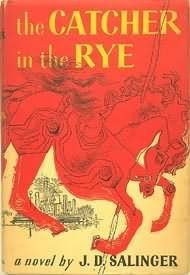 Andrew was drawn to one of the collection's editors, Art Spiegelman, and his short comic "The Several Selves of Selby Sheldrake." The multiple emotional representations of Selby acted as a perfect visualization of the multiple emotional personas that Holden Caulfield seems to manifest in Catcher in the Rye.
The Smithsonian collection got some love from my students as well. Lynda Barry's "San Francisco" drew the attention of Liana. She thought it would fit well as a way to introduce Anne Brashares' The Sisterhood of the Traveling Pants. Both reveal the silliness and emotional roller coaster that is the life of young girls, Liana claims.

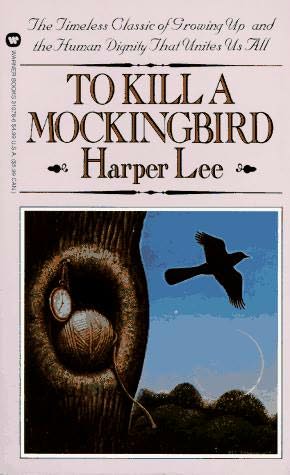
Lauren thought that the Fantastic Four reprint featuring the classic villain the Hate Monger would be a neat way to build connections concerning racism and fanaticism in Harper Lee's To Kill a Mockingbird, especially with its allusions to the Klan and other fanatical groups.
Dani enjoyed the R. Crumb selection "I Remember the Sixties" and thought she could use it to help students learn about alternate or underground scenes like those the Beat poets inhabited and created. She also felt she could extrapolate themes from the story into discussions on the poetry of feminist poets like Adrienne Rich, Anne Sexton and Sylvia Plath, an idea that surely makes many Crumb critics grin from ear-to-ear as they see the oft-considered misogynist cartoonist's work appropriated for the serious study of feminist ethos. Dani admitted to having to pick and choose from the panels carefully but was excited about the bridge potential.
Esteban enjoyed a classic Spider-Man story where the arachnid kid continually runs into trouble, from one obstacle to the next, and found connections to the constant trials of epic heroes, especially Odysseus from The Odyssey.
Nicole enjoyed the Will Eisner short story "Izzy the Cockroach and the Meaning of Life" and felt it a smart bridge into the play Death of a Salesman. Both Willy Lohman and Jacob from the Eisner deal with feelings of uselessness and contemplate their place in the world after losing employment, she mentions.
Another activity, based on ideas associated with Young Adult literature (See Joan Kaywell's Adolescent Literature as a Complement to the Classics series) and more recently with comic art (See my collection Building Literacy Connections with Graphic Novels) asked students to come up with a bridge that would link a comic story thematically with a more traditional text such that the comic piece could help build prior knowledge, pre-reading strategies, and text-to-text connections between the texts.
Students had read either Big Fat Little Lit or The Smithsonian Book of Comic-Book Stories, both anthologies, and chose their comic stories from them. They had some great ideas! 
Greed emerged as a major theme. Victor felt that the Big
Fat Little Lit story "The Baker's Daughter," adapted by Harry Bliss, would make an excellent bridge to other works that dealt with greedy characters and the effects of avarice. Dickens' "A Christmas Carol," for example. Victor also noticed what became the second most -explored theme in the class: judging by appearances. He thought that because of this theme, the comic story might also be a neat bridge into Henry James' novella Daisy Miller.Victoria found greed to be central to another Big Fat Little Lit expert, "It Was a Dark and Silly Night" by J. Otto Seilbod and Vivian Walsh. Because of how desire for money doomed its penguin characters, she though it would be a great match for Chaucer's "Pardoner's Tale."
Beyond Victor/Victoria, Sophia dealt with issues of greed and jealousy in Dan Clowes' interpretation of Sleeping Beauty from the Little Lit anthology. Clowes' version involves a mother who wants power for herself but knows that if a fair lady who married her son but now sleeps for years on end ever awakens and produces children, they will inherent the kingdom instead. So, she plots to make sure things go her way, only to be ruined by her own plotting and lust for control. Sophia noted direct connections to characters from Shakespeare's Othello, especially between the scheming mother and Iago.
On the theme of appearances, Jennifer wrote that "Pretty Ugly," by Ian Falconer and subtle genius David Sedaris, would be a nice pairing with Sandra Cisneros' "Chanclas" from The House on Mango Street. In the Cisneros, a young girl is embarrassed by her clunky old shoes and is afraid people will think poorly of her, but an uncle makes her the center of positive attention by getting her to dance with him, and all the anxieties melt away.
Jennifer says that in the end of both these stories, the characters become comfortable with who they are.Sara also thought "Pretty Ugly," collected in the Little Lit book, would be a good story for classroom use, especially if used to bridge into Nancy Farmer's The House of the Scorpion, in which certain humans are considered lesser beings because of the genetic make-up, just as the main character of "Pretty Ugly" is ostracized before making a sudden transformation. Mary Jenny though "Pretty Ugly" would be a good bridge into Batsy Byars' Summer of the Swans because both feature characters who feel different, like they don't fit in.
Rounding out ideas associated with Big Fat Little Lit choices, Erick thought Claude Ponti's interpretation of "The Enchanted Pumpkin" might be a quick little bridge into Double Identity by Margaret Peterson Haddix because both stories might deal with characters who want to be something they aren't, or want to change themselves or others into something that allows them to escape from traits they'd rather not acknowledge.
Andrew was drawn to one of the collection's editors, Art Spiegelman, and his short comic "The Several Selves of Selby Sheldrake." The multiple emotional representations of Selby acted as a perfect visualization of the multiple emotional personas that Holden Caulfield seems to manifest in Catcher in the Rye.
The Smithsonian collection got some love from my students as well. Lynda Barry's "San Francisco" drew the attention of Liana. She thought it would fit well as a way to introduce Anne Brashares' The Sisterhood of the Traveling Pants. Both reveal the silliness and emotional roller coaster that is the life of young girls, Liana claims.
Lauren thought that the Fantastic Four reprint featuring the classic villain the Hate Monger would be a neat way to build connections concerning racism and fanaticism in Harper Lee's To Kill a Mockingbird, especially with its allusions to the Klan and other fanatical groups.
Dani enjoyed the R. Crumb selection "I Remember the Sixties" and thought she could use it to help students learn about alternate or underground scenes like those the Beat poets inhabited and created. She also felt she could extrapolate themes from the story into discussions on the poetry of feminist poets like Adrienne Rich, Anne Sexton and Sylvia Plath, an idea that surely makes many Crumb critics grin from ear-to-ear as they see the oft-considered misogynist cartoonist's work appropriated for the serious study of feminist ethos. Dani admitted to having to pick and choose from the panels carefully but was excited about the bridge potential.
Esteban enjoyed a classic Spider-Man story where the arachnid kid continually runs into trouble, from one obstacle to the next, and found connections to the constant trials of epic heroes, especially Odysseus from The Odyssey.
Nicole enjoyed the Will Eisner short story "Izzy the Cockroach and the Meaning of Life" and felt it a smart bridge into the play Death of a Salesman. Both Willy Lohman and Jacob from the Eisner deal with feelings of uselessness and contemplate their place in the world after losing employment, she mentions.
Perry Moore's YA Novel May Get Small Screen Treatment
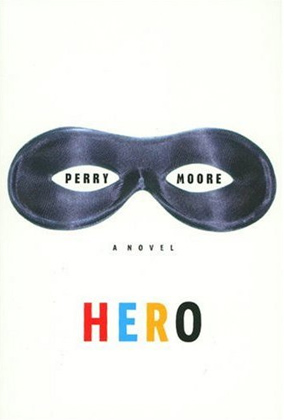 Hero, a Young Adult novel about a gay superhero, is being considered as a Showtime TV series produced by comics legend Stan Lee, according to IVC2.
Wednesday, November 12, 2008
NCTE, Others Collaborate on "The Code of Best Practices for Fair Use of Media Literacy Education"
So, you've got this great comic that you want to share with the class, but you've only got one copy and an opaque projector. Or, you want to share scenes from a graphic novel in excerpt, but you don't know how much is too much to share. Or, you've noticed that Watchmen seems to have a soundtrack, and you'd like to have students listen to the songs mentioned in the text, but how much of the song can you play? Your principal keeps telling you all these stories about lawsuits and is giving you one more reason to be paranoid. What to do?
Well, I've been teaching my students about fair use and using the advice found on page 228 of Mary T. Christel and Scott Sullivan's NCTE-published collection Lesson Plans for Creating Media-Rich Classrooms, but now NCTE and other media organizations have joined together to bring greater clarity and ease of mind to classroom teachers who want to make the most of media resources.
(and Traci Gardner of NCTE is blogging about fair use this week too, if you don't have a copy of the Christel and Sullivan handy).
The Code of Best Practices in Fair Use for Use of Media Literacy seeks to help by offering explanations, resources, definitions, and myths about Fair Use. Should I be able to embed the following video from the Center for Social Media without worry? Well, it gives me the option to embed, just like some comic strip sites are now offering, so it seems OK... but guess I'll have to read the new NCTE code to better know...
Well, I've been teaching my students about fair use and using the advice found on page 228 of Mary T. Christel and Scott Sullivan's NCTE-published collection Lesson Plans for Creating Media-Rich Classrooms, but now NCTE and other media organizations have joined together to bring greater clarity and ease of mind to classroom teachers who want to make the most of media resources.
(and Traci Gardner of NCTE is blogging about fair use this week too, if you don't have a copy of the Christel and Sullivan handy).
The Code of Best Practices in Fair Use for Use of Media Literacy seeks to help by offering explanations, resources, definitions, and myths about Fair Use. Should I be able to embed the following video from the Center for Social Media without worry? Well, it gives me the option to embed, just like some comic strip sites are now offering, so it seems OK... but guess I'll have to read the new NCTE code to better know...
Tuesday, November 11, 2008
My New Home State Set To Impress Me -- and Take a Lead in Gaphic Novels in Education

The Diamond Bookshelf reports that the Texas Library Association will soon release a "Maverick Graphic Novel List" to help librarians get graphic novels in their collections and in their schools.
Not too shabby for a state that sometimes seems behind the times when it comes to progressive pedagogy! As history has shown us, once the librarians get going with graphic novels, more and more teachers will follow.
Typically, this is how it seems to go:
1. Librarians take the lead and get graphic novels in their collections
2. Librarians note amazing interest and huge gains in circulation numbers.
3. Librarians start talking with teachers, or visa-versa, about how graphic novels can engage reluctant readers.
4. Teachers come to see graphic novels as good for reluctant readers.
5. Hopefully teachers read more about graphic novels, learn that they are good for all sort of readers, from ELL to gifted student populations.
Review of Cleopatra: The Life of an Egyptian Queen
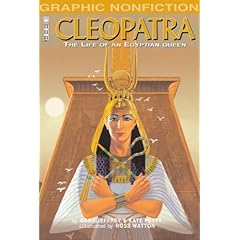 Another in Rosen's series of graphic biographies/graphic nonfiction, Gary Jeffrey, Anita Ganeri, and Ross Watton's Cleopatra: The Life of an Egyptian Queen is an impressive text.
It blends prose exposition, graphic storytelling, vocabulary and character charts, glossary and art in such a way as to really give the reader a complete feeling for the history of this enigmatic Egyptian.
It's an excellent complement to any prose textbook or encyclopedia entry on the subject of the Roman Empire and has well-rendered sequential panels featuring characters, clothing and auxiliaries that look historically accurate.
The graphic novel is not going to win an Eisner any time soon, but I was truly impressed by its breadth, its use of multiple formats, and the sincere effort and craft behind the book. One doesn't always expect much from these types of graphic novels, but this one, intended for upper elementary and middle school readers, delivers.
Monday, November 10, 2008
"Verily, so sayeth me, in yon scroll resembing fair word balloon"
Thanks to P. Coogan and J. Tondro for reminding me that the use of word balloon technology goes back a long way, even if the balloon itself has done some evolving:
Click here, scroll a bit, and enjoy.
"Tis your day to dispose of the refuse via trans-
p ort to yonder corner!"
Click here, scroll a bit, and enjoy.
"Tis your day to dispose of the refuse via trans-
p
 ort to yonder corner!"
More on Vocabulary
What to call sequential art narratives, especially comics and graphic novels, has been on the mind of various populations who study or who have recently "discovered" the form. I prefer sequential art narratives, obviously, but the term hasn't caught on because of its length and, my guess is, because it has the word "art" in it, and that tweaks literary-minded folks (I sort of laugh at this. Literature isn't art?). Others don't want nonfiction labeled under the heading of novel. We see "graphica," "graphic nonfiction," "poetry comics," etc. popping up to try to distinguish one form of comics-based sequential art from another. A recent discussion on a comics list serve brought up a redefining of the term "comics" as a shortening of the verb "co-mixing" since comics mix together words and images. Very cool idea, I think.
More Comics-Making Software and Programs!
so, you might know about ComicLife, but there are many other comics-making applications out there as well! One is Pikistrips, a web-based application that allows folks to upload their own photos and make photo-essays using the comic strip format. Comeeko is apparently very similar, if not the same thing as Pikistrips. Lou Novachek recently drew my attention to this article, which details a new program called Pixton. Pixton even offers a virtual classroom sort of cartooning!
And thanks to Meera for mentioning toondoo, yet another exciting application!
And thanks to Meera for mentioning toondoo, yet another exciting application!
Friday, November 07, 2008
PCA/ACA looking for Proposals
CFP/Press release from Wendy Goldberg:
Conference: PCA/ACA 2008 National Conference (www.pcaaca.org)
Place: New Orleans Marriott, New Orleans, LA
Dates: April 8-11, 2009
Submission Deadline for proposals: Friday, November 21
This is the national meeting of the Popular Culture Association andthe American Culture Association, and this submission is under thearea "Asian Popular Culture."
Panel #1:Title: Horror Anime and MangaThis panel invites papers on any aspect of horror anime or manga.Essays may use texts that can be classically defined as "horror"(i.e., ghost stories) and may also explore the use of horror figures(i.e., vampires) in other genres (i.e., shoujo).
Panel #2Title: Anime and MangaOpen call for papers on any aspect of anime and manga studies.
We welcome submissions from a variety of academic and criticalapproaches.Submissions should be sent in the form of a 150-250 word abstract,outlining what you would like to present.
Include contact information,any audio-visual needs, and a CV.Submit by Friday, November 21, 2008 to Wendy Goldberge-mail: wendy.d.goldberg@uscga.edu
or snail mail:
Wendy Goldberg
Dept. of Humanities
United States Coast Guard Academy
27 Mohegan Ave.
New London, CT 06320
Conference: PCA/ACA 2008 National Conference (www.pcaaca.org)
Place: New Orleans Marriott, New Orleans, LA
Dates: April 8-11, 2009
Submission Deadline for proposals: Friday, November 21
This is the national meeting of the Popular Culture Association andthe American Culture Association, and this submission is under thearea "Asian Popular Culture."
Panel #1:Title: Horror Anime and MangaThis panel invites papers on any aspect of horror anime or manga.Essays may use texts that can be classically defined as "horror"(i.e., ghost stories) and may also explore the use of horror figures(i.e., vampires) in other genres (i.e., shoujo).
Panel #2Title: Anime and MangaOpen call for papers on any aspect of anime and manga studies.
We welcome submissions from a variety of academic and criticalapproaches.Submissions should be sent in the form of a 150-250 word abstract,outlining what you would like to present.
Include contact information,any audio-visual needs, and a CV.Submit by Friday, November 21, 2008 to Wendy Goldberge-mail: wendy.d.goldberg@uscga.edu
or snail mail:
Wendy Goldberg
Dept. of Humanities
United States Coast Guard Academy
27 Mohegan Ave.
New London, CT 06320
"Looks Good to Me": The Adventures of Rabbi Harvey
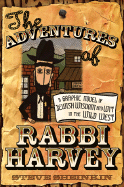 My students recently finished a 3-week stint learning about graphic novels and their pedagogical uses. One of the activities they had to do was bring in reviews of graphic novels they thought kids would find interesting. The Rabbi's Cat, a great series, was a popular choice. Well, here's a book about a Rabbi who doesn't need a feline to run his household. The Adventures of Rabbi Harvey is described as a combination of Jewish and American folklore.
It looks like a good read to me. It also helps me remember just how much sequential art in America owes to Jewish Americans. So, I'm glad to see some graphic novels exploring Jewish history, customs, and folklore directly.
Thursday, November 06, 2008
The Election's Over. Now what?
Well, we've seen comic book creators and character supporting nominees, and we've seen comic book biographies of the candidates. Now that the race is over, what does sequential art have to offer us? How about a recap of the whole thing? That's what Dan Goldman's upcoming graphic novel appears to offer. A piece of history in the making, dealing with the topic of history in the making!

Wednesday, November 05, 2008
The Drive to Focus more on 21st Century Literacies
From the latest NCTE INBOX:
School Leaders: Focus on New-Age Skills
A new survey says that 21st century assessments should be at the top of policymakers' lists. eSchool News, November 4, 2008
NCTE recently changed its "move toward a definition of 21st century literacies" statement to an actual "definition of 21st century literacies," so it is good to see these sort of articles in the inbox.
School Leaders: Focus on New-Age Skills
A new survey says that 21st century assessments should be at the top of policymakers' lists. eSchool News, November 4, 2008
NCTE recently changed its "move toward a definition of 21st century literacies" statement to an actual "definition of 21st century literacies," so it is good to see these sort of articles in the inbox.
"Yes We Can" Engage in Visual Literacy
So, after the electoral votes tallied in favor of Obama, you immediately turned off your televisions and radios and eagerly awaited the transcript of Obama's victory speech and McCain's concession, right? It was hypertext that moved you to tears when you read about the 106 year old lady voting in Atlanta. It was the print out that inspired you more than you've been inspired in years, correct?
Not for most of you. Admit it: it was the visual, the auditory experience that made this so critical a moment. SEEING him take the stage, hearing his words, noting the expression in the audience's faces. Noting how the press visually represented the votes, the results, and how they framed the speech events that came shortly thereafter. If only for a moment, admit that on this day, listening, speaking, visualizing and visually representing made up the bulk of your READING experience. Sure you went straight to CNN afterwards; sure you blogged and e-mailed and twittered once you heard the news. You engaged in a complete, multimodal literacy experience. As the nation rediscovered its potential for change in the 21st century, you pulled from all of your critical literacy skills and fully read it, savored its visual cues, its print, and its auditory stimulus.
Not for most of you. Admit it: it was the visual, the auditory experience that made this so critical a moment. SEEING him take the stage, hearing his words, noting the expression in the audience's faces. Noting how the press visually represented the votes, the results, and how they framed the speech events that came shortly thereafter. If only for a moment, admit that on this day, listening, speaking, visualizing and visually representing made up the bulk of your READING experience. Sure you went straight to CNN afterwards; sure you blogged and e-mailed and twittered once you heard the news. You engaged in a complete, multimodal literacy experience. As the nation rediscovered its potential for change in the 21st century, you pulled from all of your critical literacy skills and fully read it, savored its visual cues, its print, and its auditory stimulus.
Tuesday, November 04, 2008
Graphic Novel Reporter to Debut Soon
Another entity wanting to bring you information on comics and graphic novels for the teen set.
Publishers Weekly "Best Of" List
Scroll down a bit for the list of best comics. Good to see Lynda Barry and Jaime Hernandez on the list.
Monday, November 03, 2008
CBR Story/Collection of Images Connecting Comics and the Campaigns
A couple of my favorites gathered from the story at Comic Book Resources. Check out the link!

Must Read: The Best American Comics 2008

Guest-edited by Lynda Barry, this installment of the Best American Comics series is just as good as the previous two and better than Brunetti's An Anthology of Graphic Fiction volume 1 (I hear a second volume is underway). Barry introduces the text with an ode to comics and cartoons that inspired and confused her and with wording that makes an educator think of Louise Rosenblatt's thoughts on poetry and Reader Response theory.
Barry essentially espouses a transactionalist theory of reading comics when she states, "No matter how carefully a comic strip is constructed, the reader's experience of it cannot be predicted/ There are as many version of each comic strip as there are readers./Where is a comic strip located?/Reading a comic strip more than once seems to change it as well, but of course, it's not the conic strip that is doing the changing." Rosenblatt says of the transaction that takes place between text and reader: "emphasizing the essentially of both reader and text, in contrast to other theories that make one or the other determinate....'Transaction'...permits emphasis on the to-and-fro, spiraling, nonlinear, continuously reciprocal influence or reader and text in the making of meaning. The meaning — the poem — 'happens' during the transaction between the reader and the signs on the page" (source).
Rosenblatt says of reading in general (particularly in reading poetry): "The special meaning, and more particularly, the submerged associations that these words and images have for the individual reader will largely determine what the work communicates to him. The reader brings to the work personality traits, memories of past events, present needs and preoccupations, a particular mood of the moment, and a particular physical condition. These and many other elements in a never-to-be-duplicated combination determine his response to the peculiar contribution of the text."
She defines two forms of reading, efferent and aesthetic, and mentions that most reading is done via a sliding scale between the two types:"despite the mix of private and public aspects of meaning in each stance, the two dominant stances are clearly distinguishable: someone else can read a text efferently for us, and acceptably paraphrase, but no one else can read aesthetically—that is, experience the evocation of—a literary work of art for us."
Barry says in her introduction, "When we notice new things in a story, something is being forgotten that we don't notice./Sometimes not getting the story the way it was intended can be the very thing that makes it usable." Time, experience, lack of both those things, and emotional state are just some of what affects one's reading of a comic, Barry asserts.
The comics Barry has selected certainly lend themselves to aesthetic readings, from those of-the-moment (or of-the-age) works like the selections on war and politics by Alison Bechdel and David Axe and Steve Olexa, to the parables and fables, to Pablo Picasso's naked penis and the wounded bird syndrome of Sarah Oleksyk's copy girl in "Grave-Yard," the collection drips diverse pathemata but never gets so saturated that one has to get away from it from time to time (a weakness of the Brunetti collection, which might as well have had 'insert your own cartoon character here' screaming on an otherwise empty page, "I'm so fucking lonely!!!!" Still, though, the Brunetti is worth purchasing as well).
Besides for "Salon," in which Picasso and friends attempt to find a new essential art, the most enduring comic of the collection for me, beating out the Ware and Yang and Bechdel contributions, is Joseph Lambert's "Turtle Keep it Steady," a retelling of the tortoise and the hare fable and a surprising choice for inclusion due to its simplicity and surface-level lack of seriousness. Full of tender art and little text, the economy of its message makes it all the more powerful: some are great but burn out on their own weakness for success. Better the slow burn, baby, the slow and steady beat.
The Best American Comics 2008 is a must-read for comics fans who like their sequential art with a little less capes and drapes (though it has those too!) and enough diversity of substance to keep one engaged but not overwhelmed with emotion or by common theme.
Barry essentially espouses a transactionalist theory of reading comics when she states, "No matter how carefully a comic strip is constructed, the reader's experience of it cannot be predicted/ There are as many version of each comic strip as there are readers./Where is a comic strip located?/Reading a comic strip more than once seems to change it as well, but of course, it's not the conic strip that is doing the changing." Rosenblatt says of the transaction that takes place between text and reader: "emphasizing the essentially of both reader and text, in contrast to other theories that make one or the other determinate....'Transaction'...permits emphasis on the to-and-fro, spiraling, nonlinear, continuously reciprocal influence or reader and text in the making of meaning. The meaning — the poem — 'happens' during the transaction between the reader and the signs on the page" (source).
Rosenblatt says of reading in general (particularly in reading poetry): "The special meaning, and more particularly, the submerged associations that these words and images have for the individual reader will largely determine what the work communicates to him. The reader brings to the work personality traits, memories of past events, present needs and preoccupations, a particular mood of the moment, and a particular physical condition. These and many other elements in a never-to-be-duplicated combination determine his response to the peculiar contribution of the text."
She defines two forms of reading, efferent and aesthetic, and mentions that most reading is done via a sliding scale between the two types:"despite the mix of private and public aspects of meaning in each stance, the two dominant stances are clearly distinguishable: someone else can read a text efferently for us, and acceptably paraphrase, but no one else can read aesthetically—that is, experience the evocation of—a literary work of art for us."
Barry says in her introduction, "When we notice new things in a story, something is being forgotten that we don't notice./Sometimes not getting the story the way it was intended can be the very thing that makes it usable." Time, experience, lack of both those things, and emotional state are just some of what affects one's reading of a comic, Barry asserts.
The comics Barry has selected certainly lend themselves to aesthetic readings, from those of-the-moment (or of-the-age) works like the selections on war and politics by Alison Bechdel and David Axe and Steve Olexa, to the parables and fables, to Pablo Picasso's naked penis and the wounded bird syndrome of Sarah Oleksyk's copy girl in "Grave-Yard," the collection drips diverse pathemata but never gets so saturated that one has to get away from it from time to time (a weakness of the Brunetti collection, which might as well have had 'insert your own cartoon character here' screaming on an otherwise empty page, "I'm so fucking lonely!!!!" Still, though, the Brunetti is worth purchasing as well).
Besides for "Salon," in which Picasso and friends attempt to find a new essential art, the most enduring comic of the collection for me, beating out the Ware and Yang and Bechdel contributions, is Joseph Lambert's "Turtle Keep it Steady," a retelling of the tortoise and the hare fable and a surprising choice for inclusion due to its simplicity and surface-level lack of seriousness. Full of tender art and little text, the economy of its message makes it all the more powerful: some are great but burn out on their own weakness for success. Better the slow burn, baby, the slow and steady beat.
The Best American Comics 2008 is a must-read for comics fans who like their sequential art with a little less capes and drapes (though it has those too!) and enough diversity of substance to keep one engaged but not overwhelmed with emotion or by common theme.
Subscribe to:
Posts (Atom)